
Stack Smash - Block 3D Puzzle
Tripledot Studios LimitedPuzzle
4.92.00K Reviews
- Version
- 1.3.1
- Installs
- 1.00M
- Age Rating
- Everyone
Screenshots
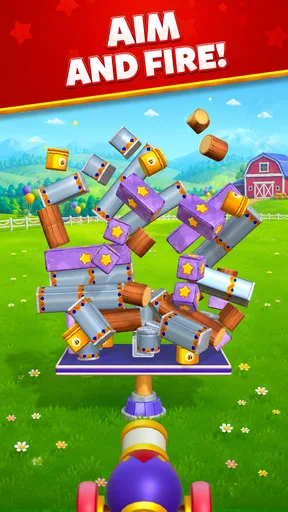
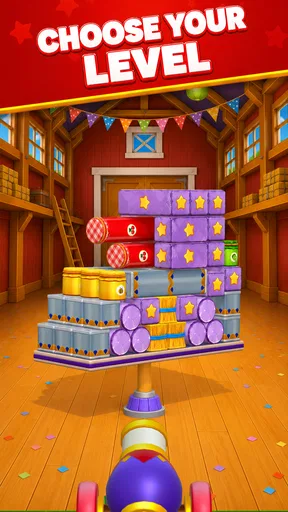
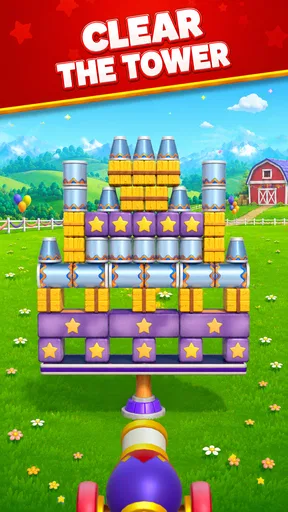
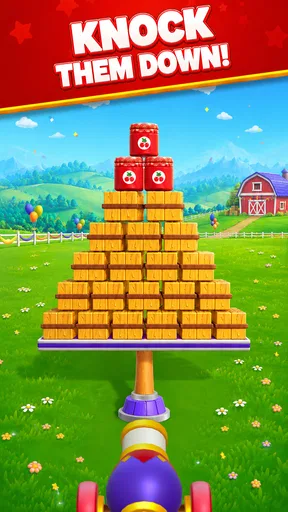
Our Review of Stack Smash - Block 3D Puzzle
 Analysis by Appyee
Stack Smash - Block 3D Puzzle caught my attention because it aims for a very specific kind of relaxation: a small physics puzzle you can pick up, understand quickly, and play without committing to a long session. Developed by Tripledot Studios Limited, this free puzzle game combines stacked objects with three-dimensional movement and a cute visual presentation. My first impression is that it is less interested in overwhelming me with rules than in making each placement feel clear, tactile, and satisfying.
The basic appeal is easy to understand. You work with a stack, judge how pieces relate to one another, and try to create a successful smash or collapse through careful decisions. That sounds simple, but physics-based puzzles depend heavily on presentation. If the objects are difficult to read, if movement feels slippery, or if the game rushes me before I can think, the whole experience becomes frustrating. Here, the cozy tone is important because it suggests a slower, friendlier approach to the familiar block-stacking formula.
That makes it a natural fit for short breaks. I can imagine opening it while waiting for an appointment, playing a few attempts during a commute, or using it as a low-pressure change of pace after a demanding game. It is also the kind of puzzle I would recommend to someone who enjoys visual feedback more than complicated instructions. At the same time, players looking for a deep competitive system, a large story, or demanding strategic planning should approach it with different expectations.
How the visual world turns stacking into a mood
The strongest part of the concept is the relationship between the art direction and the physical puzzle. A three-dimensional stack gives every move a visual consequence: height, balance, spacing, and the direction of a possible collapse all matter. The cute style helps keep those decisions inviting rather than severe. Instead of making every mistake feel like a punishment, the presentation encourages me to try again and observe what happened.
That visual softness also gives the game a recognizable identity within the puzzle category. Many block games rely on bright colors and rapid reactions, while this one is built around the pleasure of watching pieces interact. The setting feels more like a compact toy box than an abstract grid. That distinction matters because it changes how I play. I am not only searching for the correct answer; I am also watching the arrangement, anticipating the movement, and enjoying the moment when the structure gives way.
For me, readable design is especially valuable in a physics puzzle. A player needs to distinguish the pieces, understand their orientation, and see which part of the stack is likely to move first. A decorative style can easily get in the way if it adds too much visual noise. The cozy direction works best when it supports those practical questions. I found myself paying attention to the silhouette of the stack and the likely chain of movement rather than trying to decode a busy interface.
One useful habit is to pause mentally before touching anything. I look at the stack as a whole, identify the most unstable-looking area, and then consider whether removing or shifting one part will help or hurt the final smash. This is more reliable than reacting to the first attractive move. The game rewards that short moment of observation, and the visual style makes observation feel like part of the entertainment rather than preparation for it.
The setting is also effective because it avoids demanding emotional attention. There is no need to remember a complicated cast or follow a large narrative before the puzzle becomes enjoyable. The world exists to frame the activity, and that is a sensible choice for a game designed around quick interaction. I can return after a few days without feeling lost, which is a real advantage for a casual mobile puzzle.
A gentle presentation with a practical purpose
The cute look is not merely decoration. It changes the emotional cost of failure. When a carefully planned arrangement does not behave as expected, a friendly visual tone makes the result easier to accept. I am more willing to experiment because the game feels like a playful object rather than a test that is judging me.
That said, the same softness may not appeal to everyone. Players who prefer stark, minimalist puzzle boards or intense competitive presentation may find the atmosphere too gentle. The game’s personality is clear, and that clarity is a strength, but it also means the experience is not trying to serve every puzzle audience. I would choose it for comfort and tactile curiosity, not for a serious tournament-like mood.
Sound, timing, and the rhythm of a short session
The audio direction matters in a game where movement and collapse are central to the pleasure. Even without turning the experience into an action title, sound can tell me whether a piece has settled, whether a stack has shifted, and whether the final result has landed properly. The best rhythm comes from the contrast between quiet consideration and a brief burst of physical payoff.
That pacing is what makes the game feel coherent. I get a calm period in which I inspect the arrangement, followed by a more active moment when the chosen move plays out. If every action were equally loud or equally fast, the physics would lose some of its impact. A restrained rhythm gives the smash room to feel like an event without making the whole game stressful.
I tend to play this kind of puzzle with the sound enabled when I want the complete presentation, but I also value the ability to treat it as a silent pastime. It works well in situations where I should not be fully absorbed by audio, such as sitting in a shared waiting area. The visual movement carries much of the experience, while sound can add confirmation and texture when the surroundings allow it.
A practical tip is to judge the game by its pacing rather than by the first few moves alone. The opening interaction may seem almost too straightforward if I am expecting immediate complexity. The appeal grows when I stop treating each turn as a race and start looking for a clean sequence: inspect, choose, watch the physics, and adjust my next attempt. That loop is more important than any single dramatic effect.
This also explains why it can work as a wind-down game. The decision-making is present, but the presentation does not push me toward frantic tapping. I can use it after work when I want some mental activity without the pressure of a demanding action game. In that role, the combination of cute visuals, physical movement, and measured timing is more valuable than a huge amount of content.
Where the rhythm may lose some players
The relaxed pace can be a limitation for anyone who wants constant escalation. If your ideal puzzle game is built around timers, leaderboards, rapid chains, or increasingly aggressive challenges, this may feel too unhurried. Its rhythm is designed around anticipation and release, not sustained adrenaline.
There is also a trade-off between accessibility and depth. A clear, gentle presentation makes it easy to begin, but experienced puzzle players may want more layers before long. I would not choose it as my only puzzle game if I needed a system that demanded extended planning every day. I would pair it with a more complex alternative and keep this one for quick, visually satisfying sessions.
Why the physics fit the cozy puzzle idea
The physics are the heart of the experience. A conventional block puzzle usually asks me to think in terms of fixed spaces, predictable rotations, and clean line-making. A physics puzzle changes that relationship. Pieces can feel connected to one another as objects, and the result depends on balance and interaction rather than only on matching a pattern.
That difference gives each attempt a little uncertainty. I can make what seems like a sensible choice and still learn something from the way the stack responds. The important skill is not simply memorizing a solution. It is developing a visual sense for weight, support, and sequence. I find that more engaging than tapping through identical arrangements without considering the structure.
The most useful approach is to separate immediate movement from final intention. I first ask which piece can be affected safely, then I ask whether that move improves the overall setup for the smash. Sometimes the visually obvious target is not the best starting point. A less prominent piece may provide the support or opening needed for a better collapse. This two-step way of thinking is one of the more interesting aspects of the design.
Another practical insight is to treat failed attempts as information about the stack rather than as wasted turns. If a piece barely moves, that tells me something about its support. If a larger section shifts unexpectedly, I have learned which connections are more sensitive. The game becomes more satisfying when I use those results to refine my next plan instead of repeating the same action.
The three-dimensional view also affects how I scan the puzzle. I do not want to focus only on the front-facing surface. I look around the visible arrangement and consider what may be hidden behind a taller piece or supported from a different angle. That habit is especially helpful for players coming from flat block games, because the extra dimension changes what counts as an obvious move.
Still, physics can introduce friction that traditional puzzle fans may dislike. Predictable grids are comforting because a correct plan usually produces a precise result. Physical interactions can feel less exact, particularly when a small visual difference leads to a larger collapse. I appreciate that uncertainty here because it supports the toy-like mood, but players who want complete control may prefer a rule-based block puzzler.
Who gets the most from the gameplay
I think the game is best for casual puzzle players, families looking for an approachable Everyone-rated experience, and anyone who enjoys watching objects tumble after a small strategic decision. It is also a good choice for people who dislike long tutorials. The premise is easy to grasp, yet the physics give room for better judgment as I become familiar with the way stacks react.
It is less suitable for someone seeking a story-driven adventure, a large collection of distinct genres, or a highly competitive ranking chase. It may also disappoint players who need every puzzle to have one perfectly predictable solution. The game’s appeal comes from the meeting point between planning and physical response, so the uncertainty is part of the package rather than an accidental flaw.
Compared with a typical match-three game, this feels more spatial and less dependent on scanning a flat field for combinations. Compared with a classic falling-block game, it is less about speed and more about managing a structure that already exists. Compared with minimalist logic puzzles, it offers a stronger sensory payoff but may provide less satisfaction for players who prefer pure deduction. Those differences make it easier to decide where it belongs in a personal game library.
Everyday use, cost, and the small points worth considering
Because the game is free to download, it is easy to test without making an immediate purchase. The listing places it in the casual mobile space while also offering in-app purchases ranging from $1.99 to $99.99 per item. That wide range is worth remembering before spending. I would begin by playing naturally and deciding whether the core loop is enjoyable on its own, rather than assuming that optional purchases are necessary for a good first impression.
For a realistic everyday scenario, imagine having ten minutes before a meeting. A story game may be inconvenient because I do not want to lose track of a plot, while a competitive game may demand more attention than I can give. This is where the compact physics format makes sense. I can inspect a stack, make a few thoughtful moves, and stop when the time is up without feeling that I abandoned a larger task.
It also works as a reset between more demanding activities. After playing a strategy game with many systems to manage, I may want something that still engages my eyes and judgment but does not require a long-term plan. The cozy art and short decision loop provide that change of temperature. I would not call it mindless, but it is deliberately lighter than a deep strategy title.
The age rating of Everyone broadens its appeal, especially for households that want a puzzle with a gentle presentation. Adults should still make their own choices about purchases on a shared device, particularly because the available item range extends beyond a small impulse amount. The game’s accessible tone makes it easy to introduce, but responsible purchase settings remain sensible for any free-to-play title.
On the technical side, the minimum operating-system requirement is Android 7.1, and the current version is 0.6.0. That gives older compatible Android devices a chance to run it, although the feel of a three-dimensional physics game can still depend on the individual phone or tablet. If the device is dated, I would pay attention to responsiveness and visual smoothness during the first sessions rather than assuming that the minimum requirement guarantees an identical experience everywhere.
The game has already built a substantial audience, with more than a million installs and a 4.9 average from roughly thirty-two thousand ratings. Those figures suggest strong early interest and a very positive reception, while the smaller pool of written reviews means I would still rely on my own play style when deciding whether the loop has enough depth for long-term use. Popularity is encouraging, but it does not replace personal fit.
Tripledot Studios Limited has positioned the project clearly: this is a puzzle game first, with its identity carried by stacking, physics, and a cozy presentation. I like that focus. It avoids the feeling of a crowded mobile package trying to be a puzzle, a story, and a competitive platform at the same time. The trade-off is that players wanting a broader feature set may find the experience intentionally narrow.
The atmosphere works because the mechanics stay visible
What I appreciate most is that the mood does not completely hide the puzzle. The cute setting invites me in, the sound and timing give each move a pleasant rhythm, and the three-dimensional stack keeps my attention on cause and effect. The presentation supports the mechanics instead of replacing them with decoration.
There is a quiet confidence in that balance. The game does not need an elaborate narrative to justify a session, and it does not need constant intensity to make a collapse satisfying. Its best moments come from noticing a structural weakness, choosing a move with a purpose, and watching the result unfold. That process is simple enough for a newcomer but has enough physical nuance to reward patience.
I would recommend it to a friend who wants a friendly mobile puzzle for short breaks, especially if that friend enjoys tactile visuals and does not mind a little unpredictability. I would steer a hardcore logic enthusiast toward a more exact, demanding alternative if they want deep deduction above all else. I would also suggest trying it before spending, since the free entry point makes it easy to judge whether the relaxed pace matches personal taste.
Overall, Stack Smash - Block 3D Puzzle succeeds by making its atmosphere part of the play rather than a separate layer. The art direction softens failure, the sound and pacing give the physics room to breathe, and the stacking system creates a pleasant middle ground between casual tapping and serious planning. It is not the right choice for every puzzle player, but for anyone seeking a cute, cozy way to think with their eyes and hands, it has a clear and appealing place.
Privacy and Permissions
See what permissions an app requests and how it handles your data.
- Wi-Fi connection information
- view Wi-Fi connections
- Other
- view network connections, full network access, run at startup, control vibration, prevent device from sleeping, Google Play license check
Verdict
Strengths of Stack Smash - Block 3D Puzzle
- Simple drag-and-drop controls are easy to learn.
- Short levels make it suitable for quick gaming sessions.,3D block designs give the puzzle board a clear visual style.
- Gradual challenges help introduce mechanics at a comfortable pace.
- Offline play is convenient when you have no internet connection.
Limitations of Stack Smash - Block 3D Puzzle
- Later puzzles can feel repetitive once the core mechanic is familiar.
- Limited strategic variety may not satisfy experienced puzzle players.
- Small blocks can be difficult to position accurately on some screens.
- Progress may feel slow if new content unlocks gradually.
- Ads may interrupt play, depending on the version and device.
Other Releases by Tripledot Studios Limited
View All
Woodoku - Wood Block Puzzle
Puzzle4.2

Get Color - Water Sort Puzzle
Puzzle4.8


Nut Sort: Color Sorting Game
Puzzle4.8
Similar Picks in This Category
View All
Block Blast!
HungryStudio4.8

Braindom: Brain Games Test
Lahana Game Studio4.6

AMAZE!
CrazyLabs LTD4.6

Sudoku - Classic Sudoku Puzzle
Oakever Games4.7

Art Puzzle - Puzzle Games
Easybrain4.8

Amaze GO!
Oakever Games4.9
Frequently Asked Questions
What is Stack Smash - Block 3D Puzzle?
Stack Smash - Block 3D Puzzle is a casual puzzle game built around arranging and clearing blocks in a three-dimensional stack. The main objective is to make smart moves, match or remove pieces, and prevent the structure from becoming unmanageable. Its simple controls make it easy to start, while increasingly difficult layouts require planning, timing, and careful attention.
How do you play Stack Smash - Block 3D Puzzle?
Gameplay generally involves rotating, positioning, or interacting with stacked 3D blocks to create valid combinations and clear space. Players need to study the available pieces before acting, because an inefficient move can limit future options. The early stages are approachable, but later puzzles demand better spatial awareness and a more deliberate strategy rather than random tapping.
Is Stack Smash - Block 3D Puzzle free to download and play?
The game can typically be downloaded without an upfront purchase, although the exact availability and pricing may depend on whether you use Android or iOS. Free versions may include advertising, optional in-app purchases, or additional content that can be unlocked. Before downloading, it is worth checking the store listing for current purchase details, permissions, and subscription information.
Does Stack Smash - Block 3D Puzzle require an internet connection?
Many casual puzzle games of this type can be played offline after installation, which makes them convenient for short sessions while traveling or when mobile data is unavailable. However, advertisements, cloud synchronization, updates, leaderboards, and certain promotional features may require an internet connection. Because requirements can change between versions, check the latest store description before relying on offline play.
Is Stack Smash - Block 3D Puzzle suitable for children and casual players?
The straightforward block-based mechanics make Stack Smash - Block 3D Puzzle accessible to casual players and people who prefer short, low-pressure gaming sessions. Nevertheless, parents should review the game’s age rating, advertising, and in-app purchase settings before allowing children to play. Difficulty can increase over time, so younger players may need help with planning and spatial reasoning.
Play our best games!


